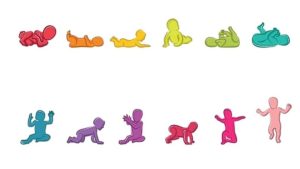
Primitive reflexes are automatic movement patterns present at birth that originate in the brainstem. They play a crucial role in early survival, sensory development, and the formation of neural pathways. As a child’s nervous system matures, these reflexes are meant to integrate (inhibit) within the first year of life, making way for more advanced, voluntary movement and cognitive control.
When reflexes fail to integrate fully they can interfere with neurological development, posture, coordination, learning, and emotional regulation.
As we move into the month of March, it’s a great time to raise awareness around children’s neurological development and highlight the importance of early support and assessment to help little ones thrive.
Key Primitive Reflexes:
1. Moro Reflex (Startle Reflex)
Purpose: Survival response to sudden stimuli.
Should integrate: 4–6 months.
If retained: Anxiety, sensory overload, poor stress tolerance and attention difficulties.
Chiropractic support: Calming the nervous system, improving brain–body communication and reducing excessive sympathetic “fight or flight” activation.
2. Rooting Reflex
Purpose: Feeding and bonding.
Should integrate: 3–4 months.
If retained: Speech difficulties, oral sensitivity and poor head control.
Chiropractic support: Supporting cranial, cervical and sensory integration related to feeding and speech development.
3. Palmar Grasp Reflex
Purpose: Early hand function and bonding.
Should integrate: 5–6 months.
If retained: Poor fine motor skills and handwriting difficulties.
Chiropractic support: Enhancing upper limb coordination and sensory-motor integration.
4. Asymmetrical Tonic Neck Reflex (ATNR)
Purpose: Hand–eye coordination.
Should integrate: 6–12 months.
If retained: Difficulty crossing midline, reading challenges and poor handwriting.
Chiropractic support: Supporting cervical spine function and bilateral brain integration.
5. Symmetrical Tonic Neck Reflex (STNR)
Purpose: Crawling and posture development.
Should integrate: 9–11 months.
If retained: Poor posture and attention difficulties.
Chiropractic support: Enhancing postural control and spinal stability.
6. Tonic Labyrinthine Reflex (TLR)
Purpose: Head position and muscle tone.
Should integrate: 6 months.
If retained: Poor balance, coordination issues and motion sensitivity.
Chiropractic support: Improving vestibular processing and postural reflex control.
7. Spinal Galant Reflex
Purpose: Hip movement and crawling.
Should integrate: 3–9 months.
If retained: Fidgeting, bedwetting and postural asymmetry.
Chiropractic support: Addressing spinal sensory input and nervous system regulation.
Consequences of Retained (Unintegrated) Reflexes:
When primitive reflexes persist beyond infancy they may contribute to:
• Learning and academic challenges.
• Poor coordination and motor delays.
• Postural imbalances and scoliosis patterns.
• Emotional dysregulation and anxiety.
• Sensory processing difficulties.
• Attention and focus issues.
These challenges are not behavioural “choices” but often reflect an over aroused nervous system.

How Neurological Chiropractic Helps
Neurological chiropractic focuses on optimizing communication between the brain and body.
It is imperative to check if your child has retained reflexes as this affects their growth and development. Children are constantly undergoing changes especially in their very young years up till the age of 6. They soak up everything they are exposed to up until this age and this sets the tone for their nervous system going forward. Once your child reaches 6 these reflexes become more ingrained into their nervous systems and can lead to learning and concentration difficulties. At the age of 2 years, the child’s Grey matter grows 240% larger than any other year which is why it is so important to get your child checked for subluxations and retained reflexes as soon as possible! This means getting babies in from day 1 to correct any subluxations that could have occurred in the birthing process and can continue with them if not corrected.
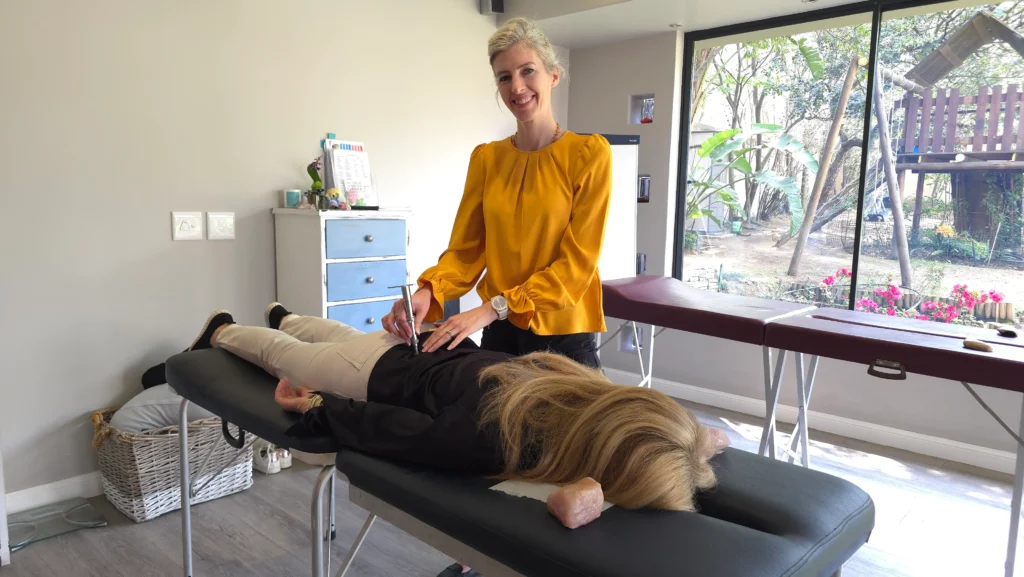
Through gentle, specific, tonal adjustments and neurologically-based care, chiropractic can:
• Reduce interference within the nervous system.
• Improve sensory input and motor output.
• Support brain maturation and reflex integration.
• Enhance posture, coordination, and regulation.
When combined with movement-based reflex integration exercises, neurological chiropractic provides an holistic approach to supporting healthy neurodevelopment in children.